
A Mauling
Originally published in Forever Magazine VII, November 2024

The news-following public found the event’s initial reporting to be opaque and insufficient.
“Report: two people, one young, involved in mauling. One dead.”
Which of the two lived, the demographic specifics of the young person (which matter greatly to a public in such cases), and the mauling’s perpetrator all floated liminally in the two layers of “report” connecting police to paper to people. This was in the best interests of most readers, who like the majority of their kind everywhere would have been better off avoiding news altogether. They couldn’t help themselves, and when the article was updated several hours later the new information reverberated unnecessarily across the minds of people who could have avoided the affliction of this and other quotidian tragedies by adjusting the direction they were looking.
“A six year old boy was fatally mauled by one of two or both of the Great Dane-Mastiff mixes owned as pets by an adult caretaker. The caretaker was seriously injured in unsuccessful attempts to save the child.”
Additional details were inevitably made available. The caretaker was a close friend of the child’s mother. She worked remotely and offered free childcare on days the mother worked early at the Dollar Tree on NE 122nd. This was one of those days. As always, the dogs were secured in the garage ahead of the child’s arrival.
After an eventless hour, the dog-owning woman entered the garage to say goodbye to the animals before driving the boy 10 minutes to his school, shutting but not locking the door behind her. The child, for whatever reason, after hundreds of days of not making this exact mistake, followed her. The woman was reported to have made every attempt to stop the ensuing attack, to the extent of lifting and aiming but not firing the handgun she kept in a case mounted to the garage wall.
Police responding at 7:30am found the woman alive with severe injuries to her hands. The child was unresponsive and the canines were in high, if confused, spirits. It was raining—this was the sort of the detail the paper included in follow up reporting to indicate doggedness. The woman was taken to the hospital. The animals were left in the garage, unknowingly awaiting their euthanasia by the county’s Animal Service response team, while the police department’s Child Abuse Team, with help from the Homicide Division, conducted their investigation.
Discourse ensued in the city’s two marginally ideologically distinct subreddits. Opinions ranged from the abolition of large dog ownership to calls for criminal charges to be brought against owner, mother, and any other tangentially connected adult. Affiliations ranged from Mud Bay to PETA to pit bull owner. Accusations included cold-hearted, sentimental, and pit bull racist.
Later, the following conversation occurred in a tree-lit and well-wreathed living room containing two small dogs and one hidden cat. The primary interlocutors were three siblings (Pete, John, and Clara), one significant other (Blake, girlfriend of John), and one parent (Mona, mother). The father (Micheal, good-natured and opinionless) and grandparents (Mona’s parents, senile, barely verbal, on holiday leave from The Home) looked on in amusement and incomprehension, respectively. How the topic arose was circumstantially contingent and quickly forgotten by all parties.
“I, for one, am appalled,” Mona said.
“Me too,” said Pete, the oldest of the three.
“That makes nine of us,” Clara said and rolled her eyes. She was the youngest sibling.
“But I do wonder,” Mona said, “what is to be done?”
“Well,” Blake said, “I just hope they don’t have to put the dogs down.”
Clara’s hair whipped around when she turned to Blake. This was something she made happen on purpose. “They must be put down!”
“Now, Clara,” said Mona.
“Now, Clara,” said Pete.
“They were, in fact, put down,” John said. “Right away.”
“How is it the dogs’ fault?” Blake asked. “What if it was Benny?” Benny was the name of one of the small dogs in the room.
“Benny is 18 pounds,” Clara said, “and fault is a question we ask of humans.”
“My feeling about it is this,” Mona said. “There was a time when dogs were dogs. When I was a girl I rode my bike to the Donaldsons’ house and along the way there was a vicious dog who would try to bite me and I would have to kick his snout. In those days dogs roamed the streets without real owners, living on trash and the occasional thrown scrap, and we didn’t have drug addicts living on every corner. My point is that we learned to deal with them. The dogs. When we keep them cooped up, we forget that they are dogs. They forget too, until they remember.”
“It’s not the dogs’ fault,” Blake said.
“I’ve seen talk of a buyback program,” John said. “It’s an interesting idea. How much do you think you’d have had to pay that woman to give up her dogs?”
“Mastiffs are a thousand year old breed selected for aggressive traits. It is a question of danger not fault,” Clara said.
“Breed isn’t predictive of aggression,” Blake said
“That’s the stupidest thing I’ve ever heard,” Clara said. Blake turned red.
“Look,” said John, “your heart goes out to those dogs but a kid dying like that is an unmitigated tragedy.”
“And what’s a dog being euthanized for a human’s mistake?” Blake asked.
“In much of the developing world, a public service,” Clara said.
“All good points. A lot of good points being made,” Pete said.
“At least acknowledge there is a hierarchy,” Clara said, looking specifically at Blake now. “There isn’t equality. We are humans and they are animals. We’re talking about a kid, and then dogs.”
“I never said equality,” Blake protested, very red in the face now. “It’s about love. The love of an animal, with nothing expected in return, is the purest kind.”
“But you do expect something in return,” said Clara. “You expect obedience, emotional codependency, cuteness, a fundamental inability to criticize you, a simplicity and ignorance, worship. Love of a dog is more similar to love of an inanimate object than love of a person.”
At this point Blake burst into tears. Both dogs looked up. John looked harshly at Clara, who out of nervous habit pulled the cat from where it cowered beneath the couch cushions onto her lap and began stroking its head. At length Blake composed herself and shared an intimate and tender story about the dog at the orphanage where she spent several years as a child. First, the dog protected her from the pranks and abuses of cruel older children. Later, she protected the dog from the kicks and bread-wrapped tacks of cruel younger children. For good behavior Blake was occasionally allowed to walk to the store with a meager allowance, and she never failed to procure a roll for the old pup. The day she departed the orphanage for good was a Saturday, the same day of the week she was allowed her store trip. She exited through the same door, around the same time, and the dog watched blindly and deafly from the window as the car pulled off into the gray morning, wagging its tail, undoubtedly thinking that in thirty minutes she would return with a roll for him, like always. The living room wept.
“I feel I understand your perspective much better now,” Clara said.
“That was brave,” said Mona.
“I love you, baby,” said John. “I had no idea you were an orphan.” These sorts of exchanges continued for several cycles.
“Everyone has such interesting thoughts about this topic,” Pete then said.
“What about you honey? What do you think?” Mona asked him. For a long time Pete gazed at the tree lights.
“I suppose,” he said at length, “that we should install a small device, similar in size and function to a pacemaker, into all dogs of a certain agreed upon size or historical temperament. This device should function remotely to, at the press of a button installed on a collar or small keychain, stop the dog’s heart and kill it instantly.” Nobody offered a direct response to this proposition because as a rule nobody paid direct attention to Pete. The fragmented conversations started as a result of his speaking ebbed out in due course, and no additional regulations on dogs or their ownership were imposed in the state or nation that holiday season.
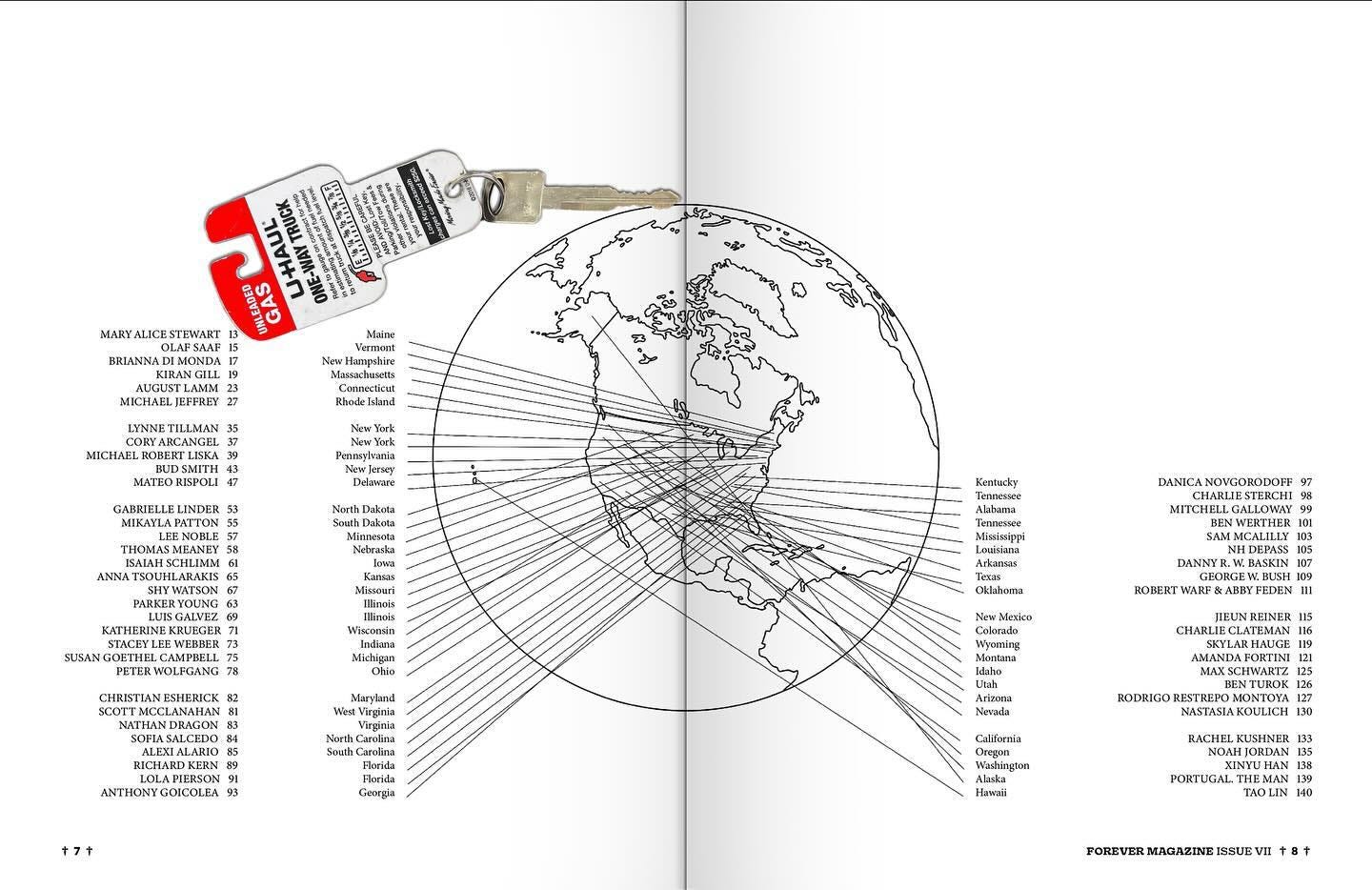
This short story was originally published in Forever Magazine’s seventh print issue, “Made in the USA,” which featured a writer or artist from every American state. “A Mauling” represented Oregon.
Loved it